
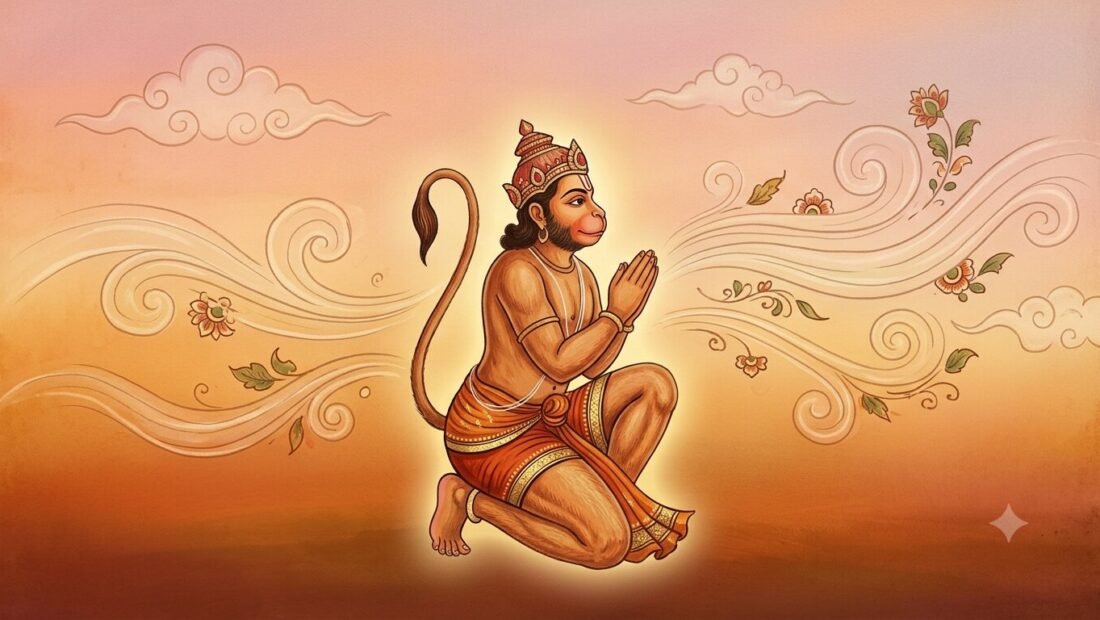
राम दूत अतुलित बल धामा। अंजनि-पुत्र पवनसुत नामा।।
Ram Dut Atulit Bal Dhama, Anjani-Putra Pawansut Nama.
Say it slowly. There’s a rhythm to it that hits differently than just reading the English translation — which, if you’ve recited the Hanuman Chalisa’s opening doha before moving into the chaupais, you already know. This is the very first chaupai, the line that actually introduces Hanuman ji to us before the text goes on to describe his deeds, his devotion, his strength.
Ram Ram, Bajrangbali — let’s break this one down properly.
Word-by-Word Meaning
Sanskrit-Awadhi devotional poetry packs a lot into very few syllables. Here’s the literal breakdown:
| Word | Meaning |
|---|---|
| राम दूत (Ram Dut) | Messenger / envoy of Lord Ram |
| अतुलित (Atulit) | Immeasurable, incomparable, without equal |
| बल (Bal) | Strength, power |
| धामा (Dhama) | Abode, dwelling place, embodiment |
| अंजनि-पुत्र (Anjani-Putra) | Son of Mother Anjani |
| पवनसुत (Pawansut) | Son of the Wind God (Pawan Dev / Vayu) |
| नामा (Nama) | Name, known as |
Put together, plainly: “O Messenger of Ram, abode of immeasurable strength, known by the name Anjani-putra, and also as Pawan Sut (son of the wind god).”
What This Line Is Actually Doing

Here’s the thing I find genuinely beautiful about Tulsidas’s writing, and I say this as someone who’s recited this Chalisa more mornings than I can count — this opening chaupai isn’t just a greeting. It’s doing three jobs at once, in fourteen words.
- It establishes Hanuman’s role — Ram Dut, the messenger, the one entrusted with Ram’s own word.
- It establishes his power — atulit bal, strength with no equal, no comparison possible.
- It establishes his identity — twice over, once through his mother (Anjani) and once through his father (Pawan Dev, the wind god), which is why he’s called both Anjaneya and Pawan Putra/Pawan Sut in different traditions.
That double parentage matters more than it might seem at first glance. Anjani was a celestial being (an apsara, in most tellings) cursed to be born as a vanara, and Pawan Dev — the wind god — is the one credited with divine intervention that gave her son his extraordinary strength and the ability to move like the wind itself. So when the chaupai calls him Pawansut, it’s not decorative. It’s explaining, in a single word, why he’s capable of the atulit bal (immeasurable strength) mentioned just before it.
Honestly, I think this is why the chaupai is placed first, right after the opening doha — before any of the stories about crossing oceans or carrying mountains, Tulsidas wants you to understand who you’re praying to and where that power comes from. Everything after this line is basically evidence for the claim made right here.
Hanuman Chalisa Meaning in English — Why the Translation Never Quite Lands the Same
I’ll be a little blunt here, and this might be a slightly controversial take: no English translation of this line fully captures it, and I don’t think one ever will. “Immeasurable strength” is accurate, but it loses the sound of “atulit bal” — the way those syllables carry weight when chanted out loud, especially in a group, especially at dawn. Devotional poetry like this was written to be recited, not silently read, and something genuinely gets lost when it’s flattened into an English sentence on a page.
That said — translation still matters, especially for people encountering the Hanuman Chalisa without a strong Hindi or Awadhi background, or for children learning it for the first time. So don’t take that as “don’t bother translating it.” Just don’t mistake the translation for the whole experience.
Why People Search for This Specific Line
A short one, because it deserves to stand alone: this chaupai is often the very first line people memorize after the dohas, simply because it’s the start of the actual chaupai section — the part most people recite daily. If you’re building toward reciting the full Hanuman Chalisa from memory, this is your true starting point.
Quick Recap
- Ram Dut Atulit Bal Dhama = Messenger of Ram, abode of immeasurable strength
- Anjani-Putra Pawan Sut Nama = Known as the son of Anjani, and as the son of the wind god
- Together, the line establishes Hanuman’s role, his power, and his divine parentage — all before the Chalisa moves into his deeds
If you haven’t already gone through the opening doha that precedes this chaupai, it’s worth reading first — it sets the devotional tone the entire Chalisa builds on: Hanuman Chalisa Opening Doha — Meaning & Significance.
And if you’re new here and want to know more about why this site exists and what we’re building around the Chalisa, chaupai by chaupai — read more about us.
FAQs
What is the meaning of “Ram Dut Atulit Bal Dhama”?
It means “O Messenger of Ram, the abode of immeasurable, incomparable strength” — the opening address to Hanuman in the first chaupai of the Hanuman Chalisa.
What does “Anjani Putra Pawan Sut Nama” mean?
It means “known by the name Anjani-putra (son of Anjani) and Pawan Sut (son of the wind god, Pawan Dev)” — referring to Hanuman’s mother and his divine father.
Why is Hanuman called both Anjani Putra and Pawan Sut?
Anjani was his mother; Pawan Dev, the wind god, is credited in tradition with granting him his extraordinary strength and speed — so both names honor a different side of his divine origin.
Is this the first chaupai or the first doha of the Hanuman Chalisa?
It’s the first chaupai — it comes right after the two opening dohas that begin the full Hanuman Chalisa text.
[…] When Hanuman went to Lanka, he didn’t just deliver a message. He became the message. He stood in the court of the demon king and spoke Rama’s words with such fearless integrity that even Ravana, the embodiment of arrogance, was momentarily shaken. Hanuman’s word was Rama’s word. There was no gap. And that is why he is the abode of incomparable strength. (I’ve explored that title’s profound meaning here: meaning of Ram Dut Atulit Bal Dhama.) […]