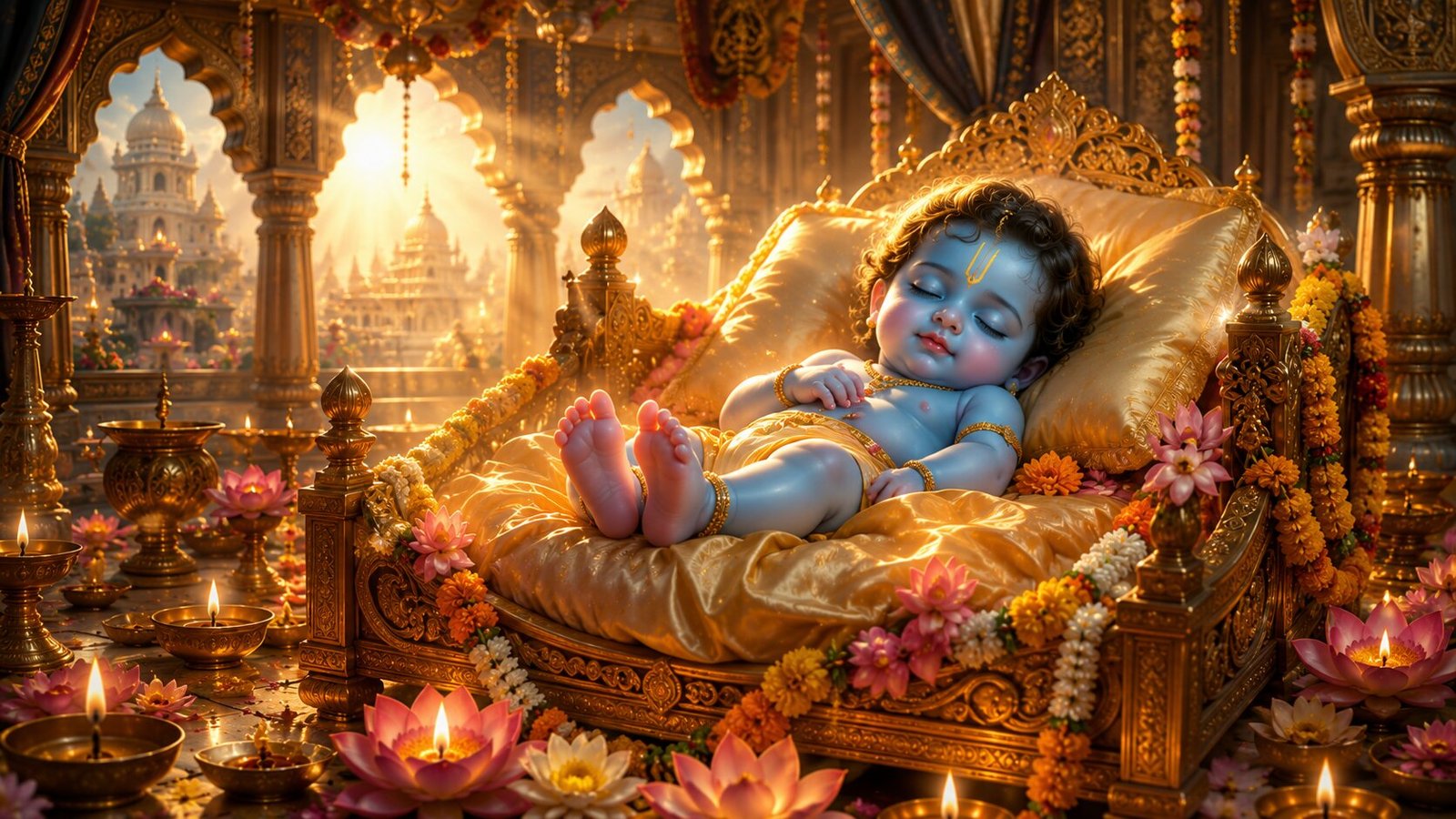
There is a hush that falls over a home when a baby is born. Lamps flicker, kohl is gently smudged on a tiny forehead, and tired eyes well up with a love so profound it feels like it might spill out and fill the room. Now imagine that baby is Lord Ram himself, cradled in a golden cradle in the palace of Ayodhya, his tiny sky-blue form glowing like a sliver of heaven. This is the image that drifts into my mind every time someone mentions Ram Navami, and it inevitably leads me to the safest, quietest place in devotion: the feet of that same Lord—his Ram Charan.
If you’ve ever looked at a lord ram childhood picture and felt your heart settle, or if the sound of a conch on Ram Navami morning sends a shiver down your spine, you already know. This isn’t just a festival; it’s a journey home. And the path, ancient scriptures whisper, is found at the lotus feet of Shri Ram. Let’s walk that path together, peeling back the layers of what Ram Charan truly means and how the sacred celebration of Ram Navami offers us a chance to place our heads where peace resides.
What Does Ram Charan Mean in Hindu Devotion?
In the bustling chants of “Jai Shri Ram” and the profound verses of the Ramcharitmanas, you will often hear the phrase “Ram Charan.” It’s a term that goes far beyond a literal translation. It’s a spiritual anchor.
The Spiritual Meaning of “Charan”
Charan simply means “feet” in Sanskrit and Hindi, but in the Bhakti tradition, it signifies the ultimate refuge. The feet of the divine represent humility, surrender, and the point of contact between the infinite Lord and the finite earth. When a devotee speaks of taking shelter in Ram Charan, they aren’t talking about a physical foot; they are describing the act of letting go of ego, worry, and the illusion of control. It’s the softest, safest place in the entire cosmos. A mother’s baby reaches instinctively for her lap; a devotee’s soul reaches for the feet of the Lord.
Ram Charan in Scriptures and Bhajans
Saint Tulsidas, the great poet-saint, was utterly intoxicated by the beauty of Ram’s feet. The entirety of the Ramcharitmanas begins by extolling the glory of the feet of his master. The famous Vinay Patrika is a collection of earnest pleas for a permanent spot at those lotus feet. In countless bhajans, we sing, “Mere Ram Charan mein laga reh,” (Stay attached to the feet of my Ram). We aren’t just singing about a body part; we are singing about a state of divine safety where karma cannot touch us and where Maya fades away. The feet of Lord Ram are celebrated because they are gentle enough to heal the touch of Ahalya, yet fierce enough to wander the forests of Dandakaranya in search of Sita Mata. They encompass both the softness of a savior and the strength of a king.
Ram Navami: The Auspicious Birth of Maryada Purushottam
While meditating on his feet is a daily comfort, the arrival of his physical form is a cosmic celebration. Ram Navami marks the birthday of Lord Ram, the seventh avatar of Vishnu, and the embodiment of righteousness.
When and Why We Celebrate Ram Navami
Falling on the ninth day (Navami) of the Shukla Paksha in the Hindu month of Chaitra (March-April), Ram Navami isn’t just a date on the calendar. It marks the end of the spring Navratri and the birth of the Maryada Purushottam—the perfect man. We celebrate because on this day, the unmanifest divine chose to take a tangible form, one that we could love as a son, a brother, a husband, and a king. We celebrate because the birth of Ram was the moment hope crystallized into reality, proving that even in an age of demons and darkness, light would always dawn in a little tent in Ayodhya.
Rituals and Traditions Across India
From the grand processions in Ayodhya itself, where thousands bathe the infant idol of Ram Lalla in the Sarayu river, to the simple Kirtans in South Indian temples where the Ramayana is recited non-stop, the country breathes devotion on this day. Fasting begins at sunrise and breaks at midnight, the believed time of his birth. Families decorate their puja rooms, and a special cradle is often set up, swinging gently as someone reads the Bala Kanda aloud. It’s a day of pure joy—mandirs echo with the sound of bhajans, and the air smells of sweet panakam (jaggery water), kosambari, and neem flowers. No matter where you are, the focus is on the child Lord, the tenderness of a God who allowed himself to be weak so his devotees could nurture him.
The Profound Connection Between Ram Charan and Ram Navami
On the surface, Ram Navami is about a birth, and Ram Charan is about the feet of a grown Lord. But in the realm of devotion, they are beautifully intertwined. When we gaze upon a lord ram childhood picture, where tiny feet peek out from a silk blanket in a gilded cradle, we are seeing the first physical manifestation of what would become the refuge of the universe.
Why Devotees Meditate on Lord Ram’s Feet on His Birthday
There is a secret sweetness in honoring the feet of Lord Ram on the anniversary of his birth. When a baby is born, what do elders do? They lovingly touch the newborn’s feet, not because the child is inferior, but because they see the divine re-entering the world through that fragile frame. On Ram Navami, we are that elder. We look at Bal Ram, and we fall at his feet, knowing these are the very soles that will measure the earth in search of love and truth. Meditating on Ram Charan during Ram Navami connects the beginning of his earthly play (leela) to its ultimate purpose: to provide a safe harbor for souls like us.
Offering Your Heart at His Lotus Feet
The greatest offering you can make during the Ram Navami puja isn’t a sweet dish or a garland; it’s the offering of your ego at his feet. This is the symbolic act of Charan Sparsh. When you bow down, visualize placing every anxiety, every strained relationship, and every failure into those infant feet. The feet that haven’t yet walked are pure potential, unsullied by the harshness of the road. This is why a lord ram childhood picture strikes such a chord. It’s a visual reminder that the safest sanctuary you will ever find is in the innocence of the divine. The infant’s foot is the softest gateway to the soul’s liberation.
Bringing the Divine into Your Home: From Idols to a Lord Ram Childhood Picture
Creating a spiritual atmosphere in your home doesn’t require a massive temple. It requires intention. As Ram Navami approaches, many devotees ask how they can keep that festive vibration alive all year round.
While a beautifully carved brass idol of Ram Darbar is traditional, there is a growing trend toward high-quality spiritual art that captures a specific emotion. I recently came across a breathtaking digital artwork of Bal Ram, the one-month-old infant, resting in an ornate golden cradle inside the royal Ayodhya palace. The sky-blue hue of his skin, the glowing diyas, and the intricate floral decorations transform a screen into a sanctum. Such a piece isn’t merely a picture; it’s a window. Displaying this as a desktop wallpaper, on a smart TV during aarti, or printing it for your meditation corner silently invites the quietest form of Ram into your daily life.
For those who cannot physically travel to the temples of Ayodhya this year, bringing a premium lord ram childhood picture into the home acts as a personal shrine. Every time your eyes fall on the sleeping infant, you are reminded to approach life with that same serene surrender that defines the Ram Charan philosophy. It turns a blank wall into a powerful source of calm, perfect for chanting the “Ram” mantra on the day of Navami.
Simple Ways to Seek Blessings of Ram Charan This Ram Navami
You don’t need to perform elaborate yagyas to feel the presence of Ram. Often, the most profound connections are forged in the simplest, quietest rituals.
Chanting and Japa
Writing the name “Ram” is a potent practice, but uttering it with the focus on his feet is life-changing. Close your eyes and chant the mantra “Shri Ram Jai Ram Jai Jai Ram” while visualizing a pair of glowing lotus feet. Don’t stress about the form; just trust that you are resting under their shadow. This is the essence of Ram Charan meditation.
Decorating with Spiritual Art
We’ve spoken about the lord ram childhood picture, but you can also create a small altar with fresh flowers and a thali of sweets. In the age of smart homes, your digital space counts as your environment. Setting a divine image as your device’s background ensures that every time you check a notification, you are met with a sliver of peace rather than stress. It’s a modern-day darshan.
Acts of Kindness as the True Charan Seva
Lord Ram’s feet walked the path of compassion. He hugged the boatman, ate the half-eaten berries of Shabari, and respected a squirrel’s tiny contribution. The truest way to honor his feet is to become his hands and feet in the world. Feed someone hungry. Comfort someone lonely. Stand up for truth, even when it’s inconvenient. When you do this, you offer Ram Navami’s true fruit at the Charan of the Lord. Tulsidas says serving the creation is watering the roots; you don’t need to pour water on the leaves when the roots are nourished.
Frequently Asked Questions About Ram Charan and Ram Navami
What is the meaning of Ram Charan?
Ram Charan refers to the sacred feet of Lord Ram. In Hindu spirituality, taking shelter in the Charan of the Lord symbolizes the highest act of surrender (Sharanagati) and the path to liberation from the cycle of birth and death.
Why is Lord Ram’s childhood so revered?
Lord Ram’s childhood (Bal Ram) represents the most accessible, loving form of the divine. A child invokes a natural sense of protection and pure love. Meditating on a lord ram childhood picture removes the fear associated with God’s judgment and replaces it with the warmth of parental love, making devotion easy and spontaneous.
How can I include Ram Charan worship in my Ram Navami rituals?
Dedicate a few moments after your Ram Navami puja to specifically meditate on the feet of the image or idol. Offer red flowers mentally at his feet and recite the shloka, “Ramaya Ramabhadraya Ramachandraya vedhase, Raghunathaya nathaya sitayah pataye namah.” You can also apply sandalwood paste (chandan) on a small silver or brass representation of Charan Paduka if you have one.
Is it okay to use digital artwork for spiritual purposes?
Absolutely. In the digital age, divinity isn’t limited to paper or canvas. A high-quality, respectful artwork like a cinematic lord ram childhood picture displayed on a screen carries the same vibration as a printed photo when seen with devotion. Bhakti is the intent, not the medium.
What makes Ram Navami different from other Hindu festivals?
While Diwali celebrates the return of Ram to Ayodhya, Ram Navami celebrates his birth. It is a festival focused specifically on the Bala Kanda (childhood phase) of the Ramayana, highlighting themes of innocence, hope, and the incarnation of righteousness in a form that is pure and undefended.
Conclusion: Walking Through Life with Ram Charan
As the clock strikes midnight on Ram Navami, and the jubilant cries of “Jai Shri Ram” fill the air, we gently rock the cradle of the infant Lord. In that sacred silence that follows the loudest praise, we find his feet. They are tiny, unspoiled, and waiting. To look at a lord ram childhood picture is to be reminded that the Lord of the cosmos once fit into the loving cup of Kaushalya’s hands.
This year, let your celebration not end with the breaking of the fast. Carry the shelter of Ram Charan with you into the Monday morning traffic, the stressful meetings, and the lonely nights. Turn your heart into a permanent Ayodhya, where the blue toddler-god plays in a golden cradle and where, at the slightest touch of his feet, all your fear dissolves. That’s the blessing of Ram Navami. That’s the promise whispered by the lotus feet.
Leave a Reply